Remember, by setting up your loan account correctly from the get-go, you’re not just building a foundation; you’re building a skyscraper. It pays off in the long run by reducing clutter and making loan management a breeze. Alright, let’s get to setting up loan accounts within QuickBooks, which is kind of like creating a dedicated folder on your computer for those important files.
This classification influences financial ratios such as the current ratio and debt-to-equity ratio, key indicators of financial health. Accurate recording of loan transactions is essential for businesses to maintain financial integrity and transparency. Loans, whether taken or given, significantly influence a company’s financial health and strategic decisions.
For loan accounts, you can pull reports that offer a bird’s-eye view of your liabilities, payments, and interest expenses. For instance, when you take out a loan, your books should reflect the amount as a liability, because, technically, it’s money you owe. Conversely, when you repay a loan, that needs to be accurately recorded to keep your financial position in check. Managing loans in QuickBooks can feel like juggling flaming torches; it’s easy to drop one without proper guidance. But don’t worry, I’m here to help guide you through the process of creating and managing loan journal entries in QuickBooks. By the end of this, you’ll feel confident in handling loans within your bookkeeping tasks, making sure everything balances out exactly as it should.

Vehicle Loan Interest Payable and Repayment of Loan
In many cases, the interest rate is lowerthan long-term debt, because the loan is considered less risky withthe shorter payback period. This shorter payback period is alsobeneficial with amortization expenses; short-term debt typicallydoes not amortize, unlike long-term debt. This is usually the easiest loan journal entry to record because it is simply receiving cash, then later adding in the monthly interest and making a regular repayment. Likewise, there is only a $1,000 expense that should be recorded in the income statement for the 2021 period.
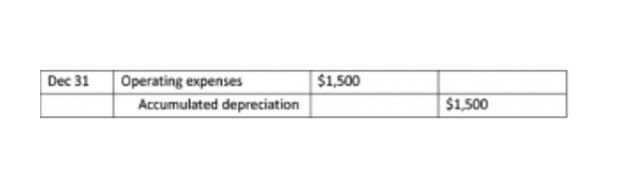
Accurate recording of loan repayments is essential for transparent financial records. Repayments reduce liabilities while impacting cash flow and interest expenses. This transaction involves debiting the loan payable account and crediting the cash account, reflecting a decrease in liabilities and cash resources. If the note transcends accounting periods and payments are made quarterly or annually, then accrued interest must be recorded. Let’s say your company closes its books monthly and payments are made on the note quarterly.
4: Prepare Journal Entries to Record Short-Term Notes Payable
I’m an incorporated small business (no employees or other shareholders) and recently needed cash to purchase a vehicle. While waiting for a personal loan to be approved, I used cash from my business account to buy the car before it was sold to someone else. I transferred the cash in full back to my business account once the loan came though (48 hours later). When opening a credit-card account for your business, be sure you understand how interest is calculated and when the bank starts charging on new purchases. Some issuers give a grace period of 20 to 30 days before charging interest, while others don’t give any type of grace period at all. The transaction balances because there is a negative on both sides of $350.
You didn’t start your business to be a bookkeeper
There are same-day funding possibilities but you need to be careful with them. You go to your local bank branch, fill out the loan form and answer some questions. Collect documents to make the process even quicker than with traditional lenders.
An amortization schedule is a complete plan of periodic payments of outstanding debt and loans. Each installment consists of a part of the principal amount and interest due for the current financial period. The tenure of the amortization schedule is the same as the tenure of a bank loan. The short-term bank loans are often not backed with a mortgage and recorded as current liabilities. Another specification of short-term loans is that they are recorded as the line of credits or bank overdrafts. A short-term notes payable created by a purchase typicallyoccurs when a payment to a supplier does not occur within theestablished time frame.
- Current liabilities are used by analysts, accountants, and investors to gauge how well a company can meet its short-term financial obligations.
- In addition to the valuable information provided, I recommend speaking with your accountant for their expertise and best course of action for your specific business needs.
- Likewise, there is only a $1,000 expense that should be recorded in the income statement for the 2021 period.
This visibility into cash flow dynamics is essential for evaluating liquidity and operational efficiency. Meticulous loan transaction management enhances transparency and informs strategic decisions. Sometimes, a loan is how you get your company up-and-running in the first place, and other times, loans are required for business decisions that need to be made, like a strategic pivot or an expansion. A short-term loan means repayment occurs in less than a year.
Using the Accounts Payable account in the above journal entry means that the invoice has not been paid with your bank funds. A car is an asset so the journal entry for it will be similar for the purchase-via-loan of other assets like workshop equipment. If you use a schedule like this, compare it to your loan account each month to ensure it is tracking as expected. Depending on the type of ledger account the bookkeeping journal will increase or decrease the total value of each account category using the debit or credit process. QuickBooks Online (QBO) does not calculate interest automatically. To manually calculate the interest due on the current payment.
Most businesses borrow money for both short-term periods (periods of one year or less) and long-term periods (periods of more than one year). Short-term debt usually involves some form of credit-card debt or line-of-credit debt. Most commonly, the number of monthly payments is decided when the loan is initiated. It is decided with the agreement between the lender and borrower. how is a short term bank loan recorded However, for the total monthly payment, different factors are considered.
You’re trying to do things as quickly as possible as easily as possible from a bookkeeping perspective. Short-Term Notes Payable decreases (a debit) for the principalamount of the loan ($150,000). Interest Expense increases (a debit)for $4,500 (calculated as $150,000 principal × 12% annual interestrate × 3/12 months). Cash decreases (a credit) for the principalamount plus interest due.
- The conversion entry froman account payable to a Short-Term Note Payable in Sierra’s journalis shown.
- If the bank loans doot meet the following requirements, they are not recognized as the long-term liability in the company’s balance sheet.
- The amount of short-term debt as compared to long-term debt is important when analyzing a company’s financial health.
- This step lays the groundwork for hassle-free bookkeeping and accurate financial insights.
If there’s a difference between the two amounts, it may be due to bank fees or prepaid interest that need to be recorded separately. The obligation to repay the loan creates a liability on your balance sheet, which is a direct result of borrowing the money. A loan account is a type of current account that is used to record the transactions related to a loan. A well-organized loan account entry can save you time and reduce stress in the long run, allowing you to focus on other important financial tasks. Interest rates, whether fixed or variable, influence the complexity of financial reporting.

And we have already recorded it in 2021 when we make the adjusting entry at the end of the 2021 accounting period. As the interest expense is the type of expense that occurs through the passage of time, we usually need to record the accrued interest expense before the payment of the loan and the interest is made. Likewise, the journal entry for loan payment with interest usually has the interest payable account on the debit side instead of interest expense account. To do this in QuickBooks, you should create separate journal entries to capture interest payments. You’ll debit the interest expense account and credit either the bank account or accounts payable, as appropriate. In order to record long-term debt for which you don’t receive a breakdown each month, you need to ask the bank that gave you the loan for an amortization schedule.